Life begins at conception. Legal protection should begin there too!

Posted By HLI Staff
Date Posted August 10, 2011

By Denise Hunnell MD

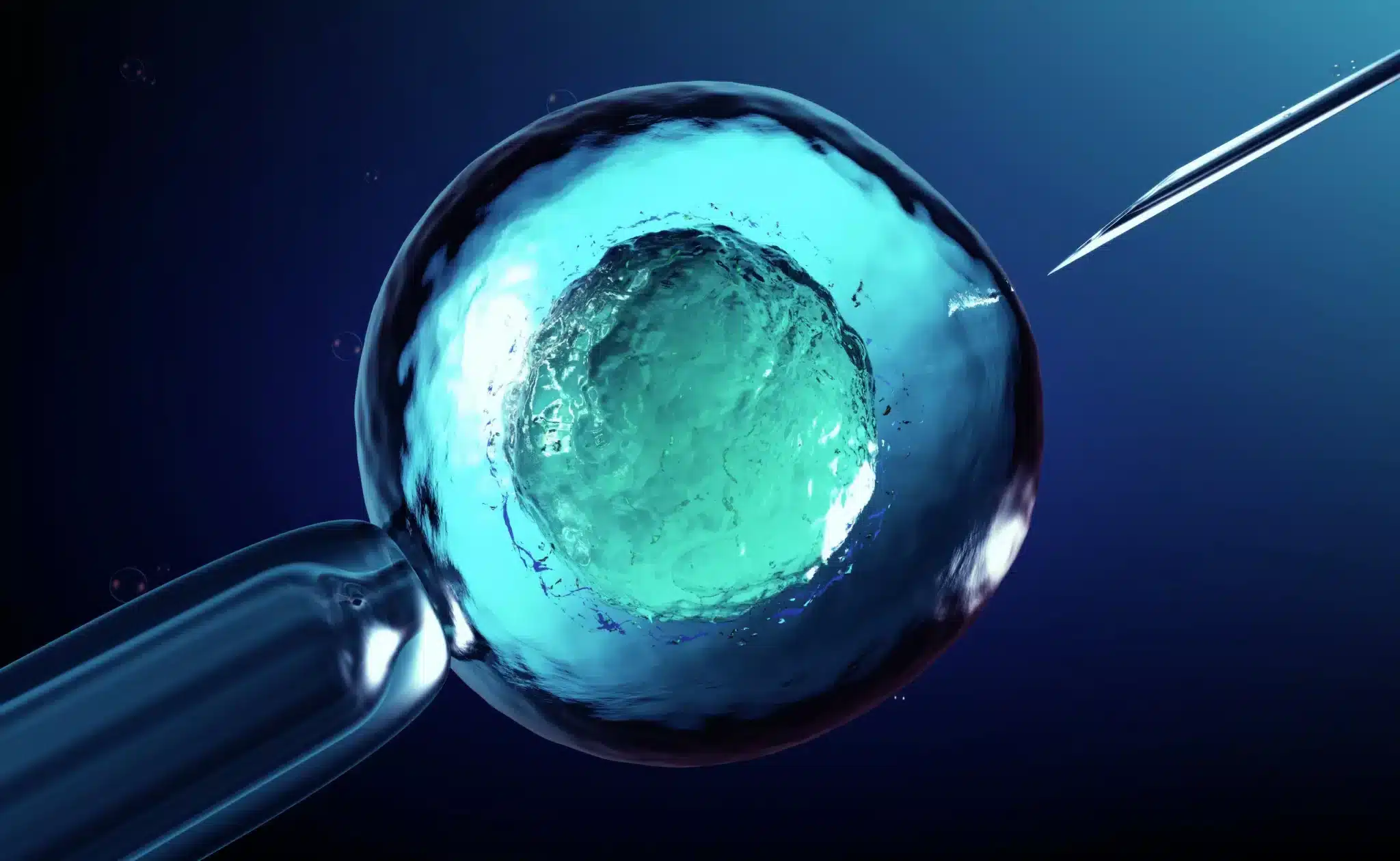
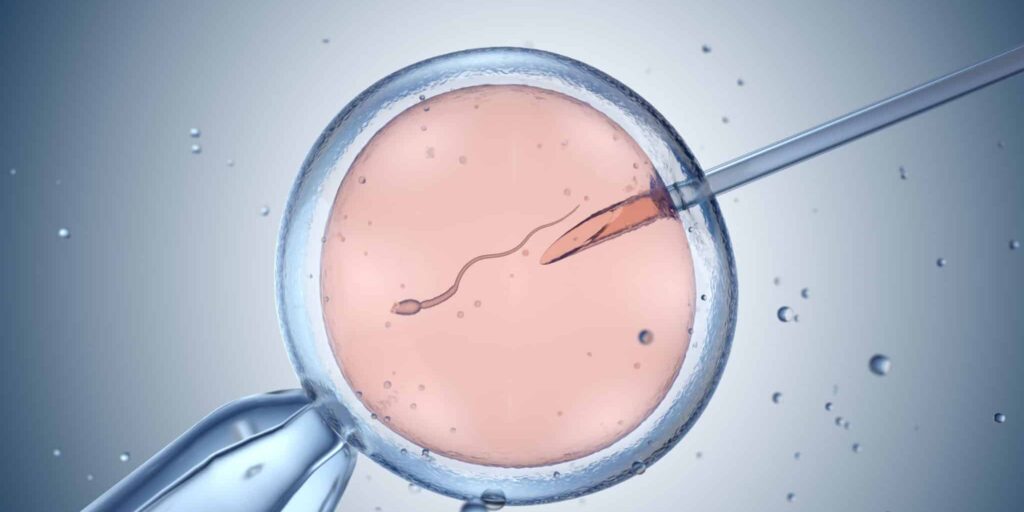
The abortion debate is not about when life begins. Science has answered that question. Life begins at conception. The newly formed embryo meets all the scientific criteria for new human life. From the beginning he has metabolic processes and is responsive to his environment. He initiates movement of both his entire organism as well as his individual parts. He grows by increasing the size of existing cells as well as by increasing the number of cells. The embryo exhibits differentiation, meaning cells transform from unspecialized stem cells to cells designed for a specific purpose. Finally, the embryo is capable of reproduction: he can form new cells for growth, repair, or replacement. Most importantly, the embryo accomplishes these life processes under his own direction. The mother supports and nurtures these processes but does not direct them. As far as science is concerned, the embryo is a distinct living human being from the moment of conception.

Therefore, it is wrong to suggest the abortion debate centers around the humanity of the embryo. That question is irrefutably resolved. The debate is actually about whether or not an unborn human being is a person who deserves legal recognition and protection.

In the United States there is no point during pregnancy at which abortion is always prohibited. In the initial Roe v. Wade decision, the Supreme Court allowed increasing restrictions as pregnancy advanced from first to second to third trimesters. In the Supreme Court majority decision for Planned Parenthood vs. Casey, the trimester system was replaced with the vague notion of “fetal viability.”  This is the point when critical organs can sustain independent life. The exact timing of the point of viability, however, is in flux due to medical advances, and also can vary from one individual to another.

Under the United Kingdom’s Health System, fetal viability is arbitrarily set at twenty-four weeks, so unrestricted abortions are allowed up to twenty-four weeks gestation. In addition, medical professionals are under no legal obligation to provide care to premature infants born before twenty-four weeks.

The story of Charlie, a boy born at twenty-three weeks gestational age, is proof that the twenty-four week mark is, at best, an imperfect determinant. Charlie is now a happy and healthy five-year-old. Fortunately for Charlie, he was not born in one of the many British hospitals that have prohibitions on resuscitative efforts for infants born before twenty-four weeks of gestational age. Not every child born before twenty-four weeks of gestation can be saved. However, every child who is born, no matter what his gestational age, should have the right to be evaluated individually and provided with all appropriate medical support.

Likewise, every unborn child is fully human with intrinsic dignity from the moment of conception. He should receive the full protection of the law from that very moment. Basing protection on the ever changing and individually variable concept of fetal viability leaves every child subject to the whims of a woman and her doctor.

Some argue that a child cannot survive independently until the point of viability, therefore, he is less than a person, and disposable. However, even a full-term infant cannot survive without care once he is born. Someone must feed him, keep him clean, and keep him warm. A mother uses her arms and her breasts to care for her newborn much as she used her womb to care for her unborn child. A newborn child who is separated from all external sources of care will die just as assuredly as an unborn child who is aborted. Both are fully dependent on others for their survival. Both are equally human persons.

Charlie is living proof that neither scientists nor politicians can declare a point in pregnancy, other than conception, at which the fetus becomes a human person. The full humanity of the fetus is present from the moment of conception. Any law that denies this humanity and allows for abortion of the unborn or the neglect of premature infants is inherently unjust. Therefore, it is our moral duty to oppose all such laws that allow for the oppression of these most vulnerable and voiceless yet totally human persons.

For more on this topic, see also “Embryos Heal Themselves in the First Days of Existence” by HLI America’s Arland K. Nichols.

Denise Hunnell, M.D., is a Fellow of HLI America. She writes for the Truth and Charity Forum.

Become a fan of HLI America on Facebook, subscribe to the Truth & Charity Forum via RSS, and follow HLI America on Twitter.

One Response to “Life begins at conception. Legal protection should begin there too!”

  1. Dennis Ohara says:

    Charlie is living proof that neither scientists nor politicians can declare a point in pregnancy, other than conception, at which the fetus becomes a human person.

    _________________________

    Obviously monozygotic twinning (aka identical twins) negates \"personhood at conception\".

    You cannot empirically equate A conception/zygote to A human being/person–evidenced my twinning and by chimeras (reverse twinning), where two distinct embryos merge to create one new embryo.

    Aside from pure science where it negates \"personhood at conception\"–you have the theological implications.

    Where you must adopt the warped untenable dogma that most people will be killed before being born via spontaneous abortions/miscariages.

Leave a Reply

Name:

Mail:

Website:


Security Code: